Effective Strategies for Post Event Monetization
Post-event content monetization is the process of turning recorded conference sessions into valuable digital assets such as transcripts, summaries, video libraries, and insights that can be sold or distributed after the event.
Post-event content monetization is the process of turning recorded conference sessions into valuable digital assets such as transcripts, summaries, video libraries, and insights that can be sold or distributed after the event.
For event organizers, this strategy can generate 10–25% additional event revenue while extending audience engagement long after the conference ends.
Using a Conference AI platform, organizers can automatically generate conference transcripts, summaries, and AI-generated conference insights, making it easier to transform live sessions into scalable post-event content.
This guide explains what works, what doesn’t, and how to implement a successful strategy.
Why Should Event Organizers Monetize Post-Event Content?
Post-event content allows organizers to extend the value of every session beyond the live event.
Instead of content disappearing after the conference ends, sessions can be transformed into:
Conference session transcription and summaries
On-demand session libraries
Educational content packages
Sponsor intelligence reports
AI-generated conference insights
For many events, this creates a new revenue stream without creating new sessions.
Key benefits include:
Additional revenue from existing content
Year-round audience engagement
More value for attendees and sponsors
Better insights into session performance
With modern AI for event organizers, turning event sessions into content can happen in days instead of weeks.
Best Practices for Monetizing Conference Content After the Event
1. Plan Post-Event Content Monetization Before the Event Starts
Successful monetization begins during event planning, not after the conference ends.
When organizers plan early, they can capture higher-quality content and avoid legal or technical issues later.
Important planning steps include:
Budget for professional recording
High-quality audio and video are essential.
Poor recordings reduce the value of conference transcripts and summaries.
Secure speaker content rights
Speaker agreements should clearly allow organizers to:
Record sessions
Generate transcripts
Repurpose sessions into post-event content
Include content access in registration
Offer options such as:
On-demand access packages
Content add-ons
VIP tiers with extended content libraries
Design sessions for long-term value
Evergreen topics generate more post-event revenue from content than highly time-sensitive discussions.
2. How Do You Monetize Content Without Reducing Event Attendance?
A common concern among organizers is that selling recordings could reduce ticket sales.
In practice, this only happens when all content is released for free immediately.
The most effective strategy is clear differentiation between live and on-demand experiences.
Protect the Value of the Live Event
Live events offer experiences that recordings cannot replicate:
Networking opportunities
Live Q&A sessions
Workshops and interactive discussions
Serendipitous connections with attendees
These experiences remain the primary reason people attend conferences.
Use Tiered Content Access
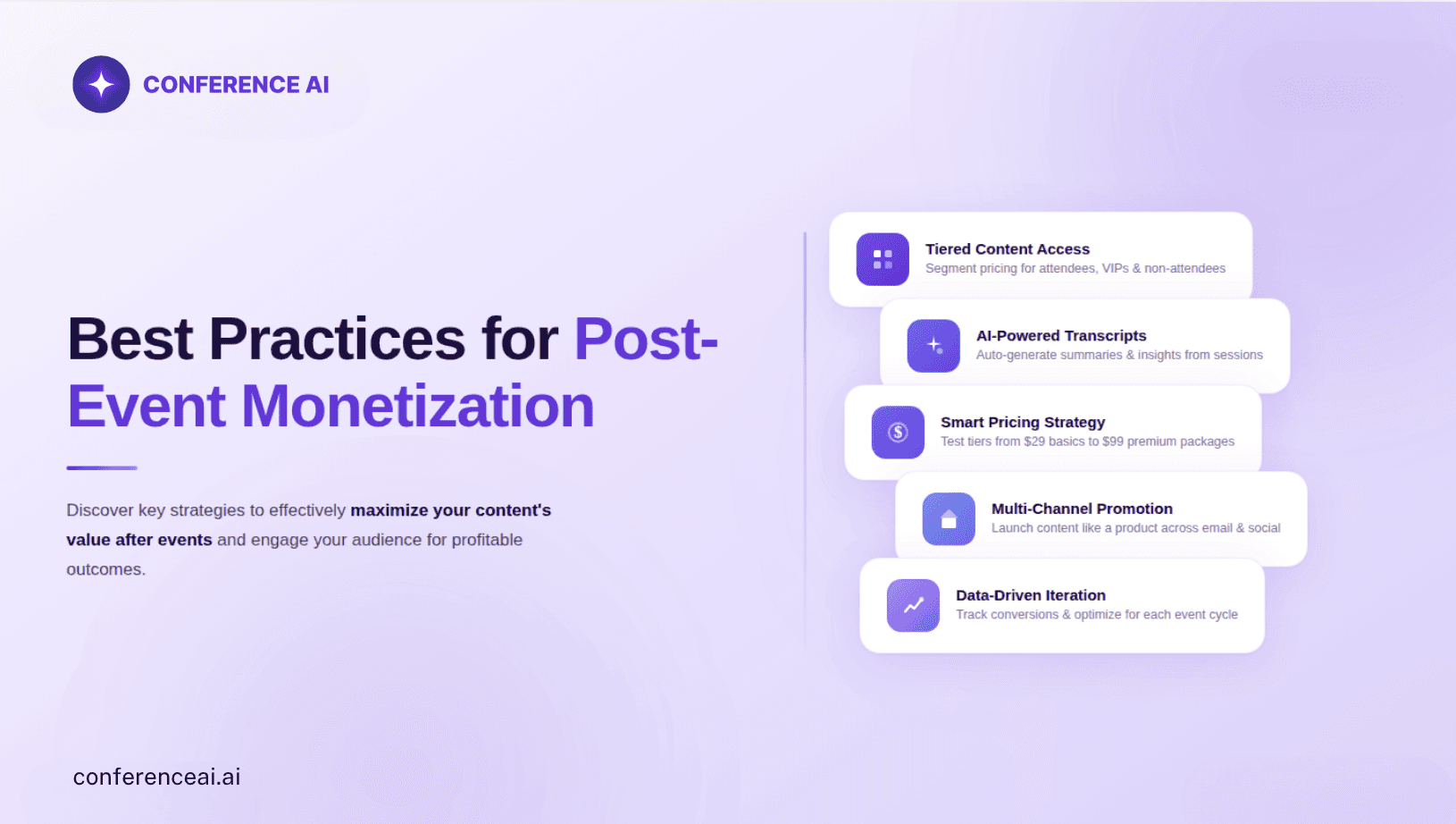
Many events successfully monetize post-event content with tiered access:
Attendees: free or discounted access
Non-attendees: full-price content packages
VIP ticket holders: exclusive bonus content
Delay Public Release
A common approach is:
Attendees receive content immediately
Non-attendees gain access 2–4 weeks later
This protects the value of attending while still generating revenue.
3. How Should Conference Content Be Priced?
Pricing conference content should reflect audience value and market demand, not just production costs.
Strong pricing strategies typically include:
Test Pricing Early
For example:
A $29 package might convert at 70%
A $99 package might convert at 15%
Despite fewer buyers, higher pricing can still generate more total revenue.
Use Tiered Content Packages
A common structure includes:
Basic access: session recordings
Premium access: recordings + transcripts and summaries
Executive packages: insights reports and curated content collections
AI-generated summaries and insights significantly increase the perceived value of premium packages.
Segment by Audience
Different audiences value conference content differently:
Attendees: loyalty pricing
Non-attendees: standard pricing
Corporate teams: bulk licenses
This segmentation maximizes revenue without alienating loyal attendees.
4. How Should Organizers Market Post-Event Content?
Post-event content should be marketed like a product launch, not a simple follow-up email.
Successful campaigns typically include:
Multi-Channel Promotion
Effective channels include:
Email sequences
LinkedIn and social media
Website banners
Retargeting ads
Partner promotion
Use Session Highlights
Short clips and key insights perform well on social media.
Examples include:
Key quotes from speakers
60-second highlight clips
AI-generated conference insights
Visual summaries of session takeaways
Use Social Proof
Testimonials from attendees increase credibility.
Examples:
“This session alone was worth the ticket price.”
“The insights changed how we approach our strategy.”
5. What Creates a Great Post-Event Content Experience?
A smooth content experience significantly increases satisfaction and repeat purchases.
Important elements include:
Easy-to-Use Content Platforms
Content libraries should provide:
Fast video playback
Mobile compatibility
Searchable session libraries
Topic filters and tagging
Complete Content Packages
If organizers offer conference transcripts and summaries, they should also include:
Slide decks
Session recordings
Downloadable summaries
Providing complete packages builds trust with buyers.
Responsive Support
Fast support for login or access issues protects your event’s reputation.
6. How Can Event Organizers Use Data to Improve Post-Event Revenue?
Successful events treat post-event monetization as an iterative process.
Organizers should track:
Conversion rates
Pricing performance
Most-watched sessions
Viewer drop-off points
Marketing channel performance
These insights help improve:
Future session topics
Content packaging
Marketing strategies
pricing models
A Conference AI platform can also analyze engagement data to generate event session insights automatically.
7. How AI Helps Turn Event Sessions Into Content
Artificial intelligence dramatically reduces the time required to repurpose conference sessions.
Instead of manually editing recordings and writing summaries, organizers can generate assets automatically.
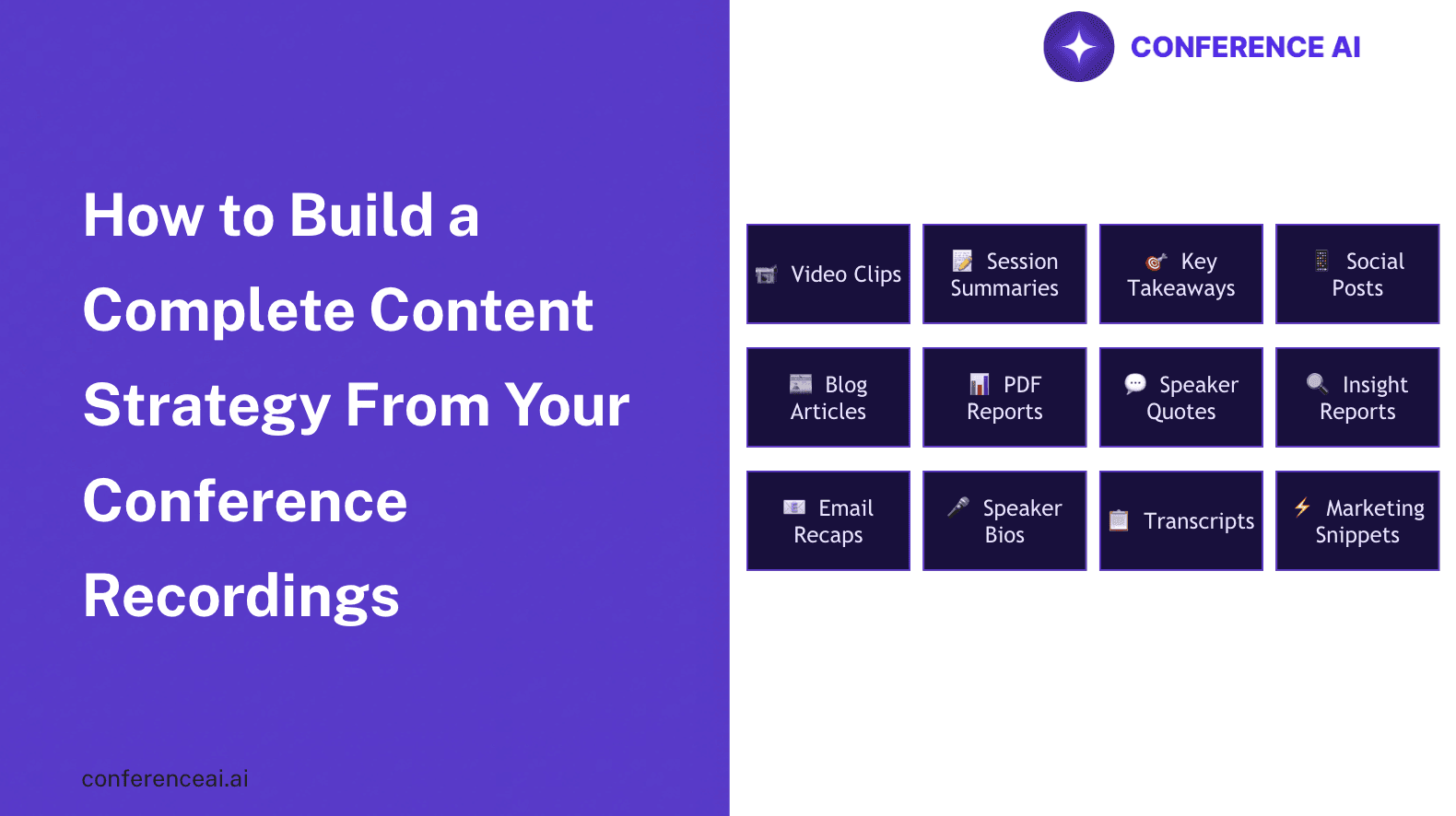
With AI for event organizers, sessions can quickly become:
Conference session transcription
AI-generated conference insights
Executive summaries
Session highlight clips
Searchable content libraries
This allows teams to turn event sessions into content within days rather than weeks.
The most effective approach combines:
AI automation for speed
Human review for accuracy and quality
8. Why Starting Small Leads to Better Results
Many organizers try to launch too many monetization strategies at once.
A phased approach works better.
Year 1
Focus on:
On-demand session libraries
Conference transcripts and summaries
Year 2
Add:
Curated content bundles
Premium insight reports
Year 3
Expand to:
Content subscriptions
Knowledge marketplaces
Sponsor intelligence products
This approach allows organizers to scale post-event revenue from content without overwhelming their teams.
A Practical Roadmap for Post-Event Content Monetization
A typical timeline looks like this:
Months 1–3: Planning
Secure leadership support
Choose a Conference AI platform
Update speaker agreements
Define monetization strategy
Months 4–6: Pre-Event Preparation
Integrate content packages into registration
Set up recording systems
Prepare marketing campaigns
Months 7–8: Event and Content Processing
Capture all sessions
Generate transcripts and summaries
Review content quality
Launch post-event content within one week
Months 9–10: Sales and Promotion
Execute marketing campaigns
Track performance metrics
Improve messaging based on data
Months 11–12: Analysis and Improvement
Measure revenue impact
Analyze session performance
Plan improvements for the next event
The Shift Toward Year-Round Event Value
The events industry is moving from single-event transactions to year-round audience engagement.
Post-event content is one of the most effective ways to support this shift.
Instead of sessions disappearing after the event ends, organizers can create:
Searchable knowledge libraries
Educational content products
Ongoing engagement with attendees and sponsors
With the right strategy and technology, conference sessions become long-term assets rather than one-time experiences.
Learn More About Turning Conference Sessions Into Content
Modern Conference AI platforms help event organizers automatically generate conference transcripts, summaries, and event session insights, making it easier to repurpose sessions and build scalable post-event content libraries.
If you're exploring ways to turn event sessions into content and create post-event revenue, learning how AI-powered platforms support this workflow is a good place to start.
To learn more how to start driving more revenue with Conference AI, book a demo here: https://conferenceai.ai/bookademo