Turning Event Data Into Dollars: How to Monetize Sponsor Intelligence
Sponsors are tired of the traditional playbook.
Turning Event Data Into Dollars: How to Monetize Sponsor Intelligence
Sponsors are tired of the traditional playbook. They pay thousands or tens of thousands for booth space, branding, and access to attendees, then leave with little more than a stack of badge scans and vague promises about “brand exposure.”
With relentless ROI scrutiny now the new normal, that’s no longer acceptable. Sponsors want measurable business outcomes, such as qualified leads, market intelligence, and proof their investment generated pipeline.
Smart event organizers are responding with a powerful new revenue stream: monetizing the intelligence generated at their events. By capturing and analyzing what happens on stage and in attendee interactions, organizers can provide sponsors with actionable business insights worth far more than logo placement and command premium prices for them.
The Sponsor ROI Gap
The typical sponsor experience looks like this. They pay $25,000 for a platinum package that includes booth space, logo on signage, and mention in promotional materials. During the event, their booth staff scan 200 badges. Three weeks later, they receive a PDF with basic attendee demographics and a spreadsheet of contact information.
Their sales team cold-calls these contacts with generic pitches, achieving perhaps a 2-5% response rate. Most leads go nowhere because the sponsor has no context about what these people are interested in, what challenges they’re facing, or where they are in the buying journey. The sponsor calculates their cost-per-lead at $125 per badge scan and wonders if they should return next year.
Events generate massive intelligence about attendee interests, pain points, and buying intent, but most of it evaporates because there’s no system to capture, structure, and monetize it.
What Stage Intelligence Reveals
Modern AI-powered analytics can extract extraordinarily valuable insights from event content and attendee behavior.
Topic and trend analysis shows which subjects came up most frequently across all sessions, what emerging technologies dominated discussions, and which pain points speakers and attendees repeatedly mentioned. For example, your conference might reveal that 68% of sessions touching on cybersecurity mentioned zero-trust architecture, representing a 45% increase from last year, while concerns about cloud security compliance came up in 34 different contexts across 12 sessions.
Engagement heatmaps reveal which sessions generated the most questions, what specific topics sparked debate or high chat activity, and which resources were downloaded most frequently. This shows what your audience actually cares about versus what organizers assumed they would.
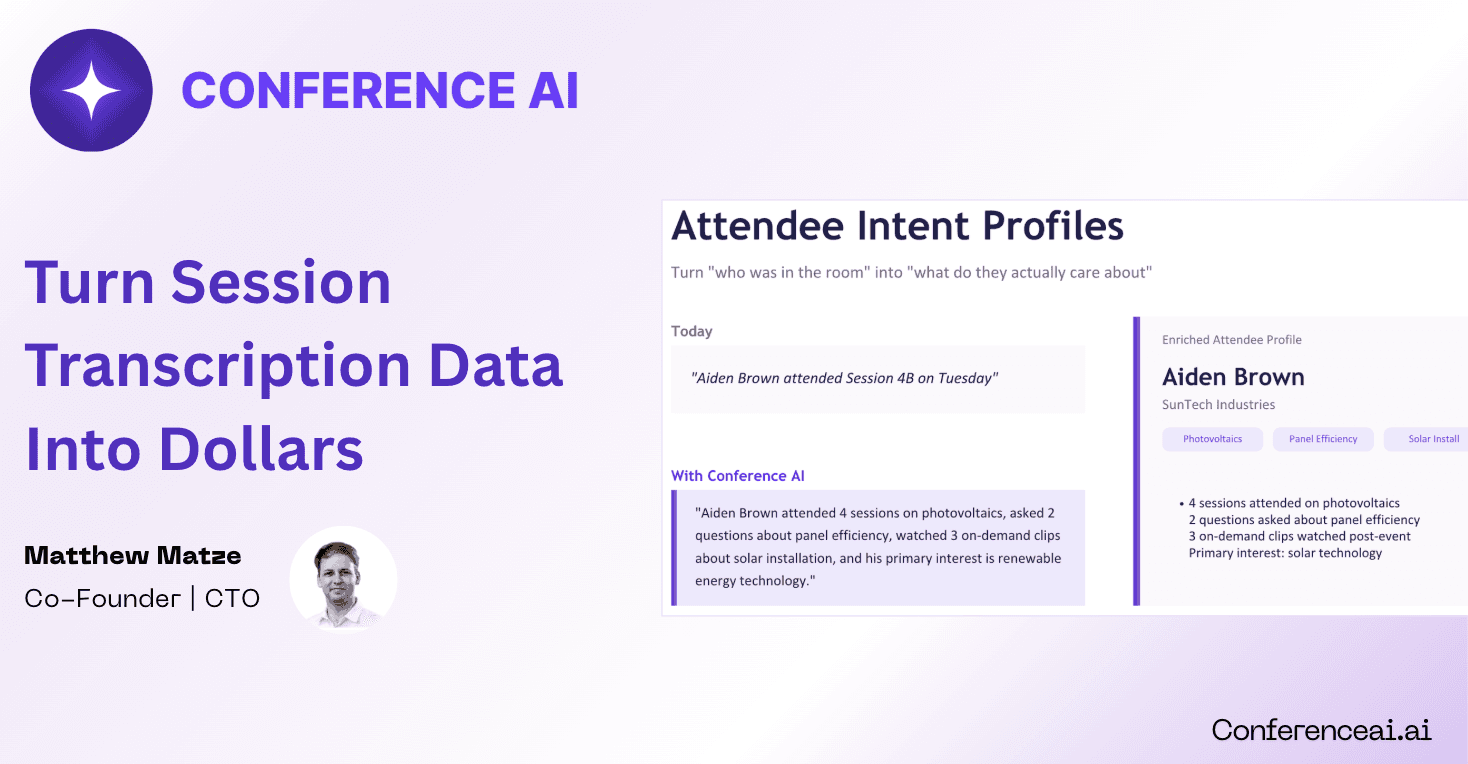
The biggest revenue opportunity comes from identifying which attendees are actively looking to buy. Advanced AI can identify when someone from Company X attended three sessions about supply chain automation, asked questions about integration with legacy ERP systems, downloaded two whitepapers on implementation best practices, and visited booths from automation vendors. That’s not just a lead, but a qualified prospect exhibiting clear buying intent in a specific solution category.
Competitive intelligence captures what attendees said about different solutions, which vendors were mentioned positively or negatively in Q&A sessions, and what objections came up repeatedly. This competitive context helps sponsors refine messaging and address concerns proactively.
Sentiment analysis adds emotional context beyond what was said. Were discussions about a particular technology enthusiastic or skeptical? Did certain pain points generate frustration or resignation?
Creating Premium Sponsor Intelligence Products
So how do you package these insights into products sponsors will actually pay for? Organizers can develop tiered sponsor packages that deliver real business value.
Bronze tier (standard): A standard package that includes badge scans and basic demographics. Baseline price is $10,000-$25,000.
Silver tier (enhanced): Everything in bronze plus an “Audience Engagement Report” showing which sessions and topics had the highest attendance and engagement, trending themes, and frequently asked questions. This industry intelligence helps sponsors understand market direction. Price premium is +$3,000-$5,000.
Gold tier (intelligence): Everything in silver plus an “Intent Dashboard” specific to the sponsor’s solution category. For a cybersecurity vendor, this might show 47 attendees from enterprise companies who showed high intent in zero-trust solutions; the top 20 most engaged prospects with context on what content they consumed; common questions and pain points mentioned related to their product category; and competitive mentions and context. This transforms generic leads into qualified opportunities with buying context. Price premium is +$8,000-$15,000.
Platinum tier (custom analytics): Everything in gold plus a custom research report analyzing event conversations for specific insights the sponsor requests. For example, you might analyze what CIOs said about current authentication challenges or how enterprises are evaluating build-vs-buy for automation. This bespoke intelligence can inform product development and go-to-market strategy. Price premium is +$15,000-$25,000.
These tiers justify higher sponsorship fees through tangible value delivery, improve sponsor satisfaction and renewal rates by demonstrating clear ROI, and create new revenue from sponsors willing to pay a premium for actionable intelligence.
Real-World Applications
Use case 1: Sales acceleration
A SaaS company sponsors your tech conference at the platinum level. They receive an intent report identifying 35 attendees from target accounts who showed interest in workflow automation, which is their core product. The report includes specific pain points that each prospect mentioned and which competitive solutions they asked about.
Their sales team uses this intelligence to craft personalized outreach like this: “I noticed you attended several sessions on automation at [Conference]. Given your questions about integration challenges, I thought you’d be interested in how we’ve solved similar issues for companies like yours...”
The results speak for themselves. They achieve a 40% response rate versus their typical 5% and 15% conversion to qualified opportunities. The sponsor calculates that these conversions generated $850,000 in pipeline, a 34x return on their enhanced sponsorship investment. They immediately commit to platinum sponsorship for next year.
Use case 2: Product development
A healthcare technology vendor receives a custom analytics report analyzing what physicians said about clinical workflow challenges across your medical conference. The report identifies a previously unknown pain point mentioned in 18 different contexts that their product roadmap doesn’t address.
They adjust their development priorities, building a feature that directly addresses this gap. When they launch it six months later, they reference learnings from your conference in their marketing, positioning themselves as uniquely responsive to clinician needs.
The result is a successful product launch informed by real user needs. The sponsor views your conference as essential strategic intelligence, not just marketing exposure.
Use case 3: Competitive positioning
A networking equipment manufacturer receives competitive intelligence showing that while their brand was mentioned positively in sessions, a specific concern about setup complexity came up repeatedly when IT professionals compared solutions.
They create a targeted campaign addressing ease of deployment, train booth staff on handling this objection, and develop new onboarding materials. At the next event, negative mentions of setup complexity drop by 65%.
The feedback loop improves their competitive position and makes your event invaluable for market intelligence.
Implementation: How to Deliver This Intelligence
Creating sponsor intelligence products requires three components.
Data capture infrastructure includes session recordings, attendee engagement data (attendance, questions asked, polls answered, resources downloaded), booth visit data and interactions, app usage and content consumption, and survey responses. Most modern event platforms provide this data, though it’s often siloed across different systems.
AI-powered analysis processes this information at scale. While manual analysis of 50 sessions to identify intent signals and trending topics would take dozens of hours, AI can process everything in minutes, mapping conversations to attendees and revealing patterns impossible to spot manually. Conference AI’s Stage Intelligence specifically “maps every conversation on stage to the people and companies behind it—revealing intent, challenges, and buying signals you can use to drive real business outcomes.”
Deliverable formats package intelligence into formats sponsors can actually use, like executive dashboards with key metrics and insights, searchable databases where sponsors can filter by topic, custom reports addressing specific strategic questions, lead lists enriched with behavioral context, and trend analysis documents. A polished report with clear implications commands premium pricing, so make these visually compelling and actionable.
Navigating Privacy and Consent
Done wrong, monetizing attendee data violates trust, but done right, it’s valuable to everyone.
Transparency in registration means including clear language in your terms that attendee behavior and engagement data may be shared with sponsors in aggregate or individual form for business purposes. Give attendees the option to opt out of individual data sharing while still participating in the event.
Aggregate vs. individual data is an important distinction. For most sponsor intelligence products, aggregated data is sufficient and raises no privacy concerns. “68% of attendees were interested in AI topics” doesn’t identify anyone. Reserve individual-level data sharing for attendees who opted in and for gold/platinum sponsors who’ve agreed to responsible use.
Value exchange matters when you’re asking for consent. Frame data sharing as beneficial to attendees by explaining that sharing their interests and engagement means they’ll receive more relevant follow-up from sponsors and exhibitors who can address their specific needs, rather than generic sales pitches. When attendees see the value, they’re more likely to consent.
Responsible use agreements protect your reputation. Require sponsors to agree they’ll use intelligence for qualified outreach, not spam. Prohibit reselling or sharing data beyond their organization. Your reputation depends on sponsors treating data responsibly.
Most attendees at B2B events understand that engagement creates opportunities. As long as you’re transparent and deliver value, privacy concerns are manageable.
Pricing Sponsor Intelligence
How much you can charge depends on event size and audience quality, intelligence depth, sponsor category, and exclusivity. A niche conference of 500 C-level executives commands premium pricing for intelligence. Basic topic trends warrant modest premiums, while custom strategic research can command $15,000-$30,000. Enterprise software companies with long sales cycles will pay more for intent intelligence than consumer product companies with transactional sales.
Consider this framework as a starting point:
Standard package (badge scans): Baseline $10,000-$25,000
Enhanced package (+engagement report): +40-60% ($4,000-$15,000 premium)
Intelligence package (+intent dashboard): +80-120% ($8,000-$30,000 premium)
Custom package (+strategic research): +150-250% ($15,000-$62,500 premium)
Test pricing with your most engaged sponsors first. You may find they’re willing to pay even more than you initially thought for intelligence that directly impacts their pipeline.
The Competitive Advantage
Most events compete primarily on attendance numbers and audience demographics. By offering sponsor intelligence products, you differentiate on value delivery instead of just volume. You’re not just providing access to an audience, you’re providing insights about that audience that sponsors can’t get anywhere else.
When a sponsor’s product roadmap is informed by your event intelligence, or their sales team’s quota attainment improves because of your intent data, they’re not going to switch to a competitor’s event to save $5,000. You become strategically valuable, not just tactically useful.
Better sponsor ROI leads to higher renewal rates and willingness to pay premium prices, which funds better event experiences and content, which generates richer intelligence, which further improves sponsor ROI. It’s a virtuous cycle.
Getting Started
You don’t need to launch a complete intelligence program overnight. Start with basic engagement reports showing topic trends and most-engaged sessions as a premium add-on to top-tier sponsors. Add intent dashboards identifying highly engaged prospects in specific categories. Offer custom strategic research for sponsors willing to pay premium prices. Finally, integrate AI-powered analysis tools like Stage Intelligence to automate data processing and scale the program across all sponsors.
The Bottom Line
The intelligence your conference generates about industry trends, attendee interests, and buying intent is worth thousands of dollars to sponsors trying to understand markets and identify prospects. By systematically capturing, analyzing, and packaging this intelligence, you create a high-margin revenue stream that also dramatically improves sponsor satisfaction. It transforms sponsorship from a commodity purchase into a strategic investment in business intelligence.
Want to learn more about implementing sponsor intelligence programs at your events? Download our complete white paper, “Unlocking Post-Event Content Monetization,” here.